Project Overview
Mint Mobile
Plans Funnel Redesign
I led the experience design team in a close partnership with Mint Mobile's ecommerce organization to redesign the purchase funnel from the ground up. My job was to set the direction, keep the team focused on what actually mattered, and make sure every design decision connected back to the thing Mint cared most about: getting more people through the funnel and into a plan.
Rather than treating this as a design execution engagement, I positioned the team as strategic partners from the start, embedding directly with Mint's ecommerce stakeholders to establish a shared understanding of user behavior, funnel data, and business priorities before a single screen was designed.
Problem Statement
The funnel was losing people before the decision
Mint Mobile's purchase funnel had a friction problem. Users were dropping off before completing plan selection, not because they weren't interested, but because the experience wasn't guiding them effectively. The plan selection UI overwhelmed users with too many simultaneous choices, and the SIM card decision layer added cognitive load at exactly the wrong moment in the flow.
The multi line builder, a high value surface for families and customers adding lines, was buried and difficult to discover. Every one of these friction points represented real revenue being left on the table.
Design Leadership
Setting the strategic direction
My first priority was establishing the design team as credible strategic partners rather than order takers. I facilitated working sessions with Mint's ecommerce leadership to align on the funnel data, identify the highest leverage intervention points, and set a shared definition of success before any design work began. That alignment upfront was what allowed us to move quickly once we were in execution mode.
I structured the team's approach around two parallel tracks: a data informed exploration of the plan selection model, and a mobile first redesign of the full funnel. I set the creative direction, established the design principles that would govern every decision, and ran weekly reviews to maintain quality and momentum across both tracks simultaneously.
Design Process
From strategy to delivery
Concept Exploration
Two bets, one question
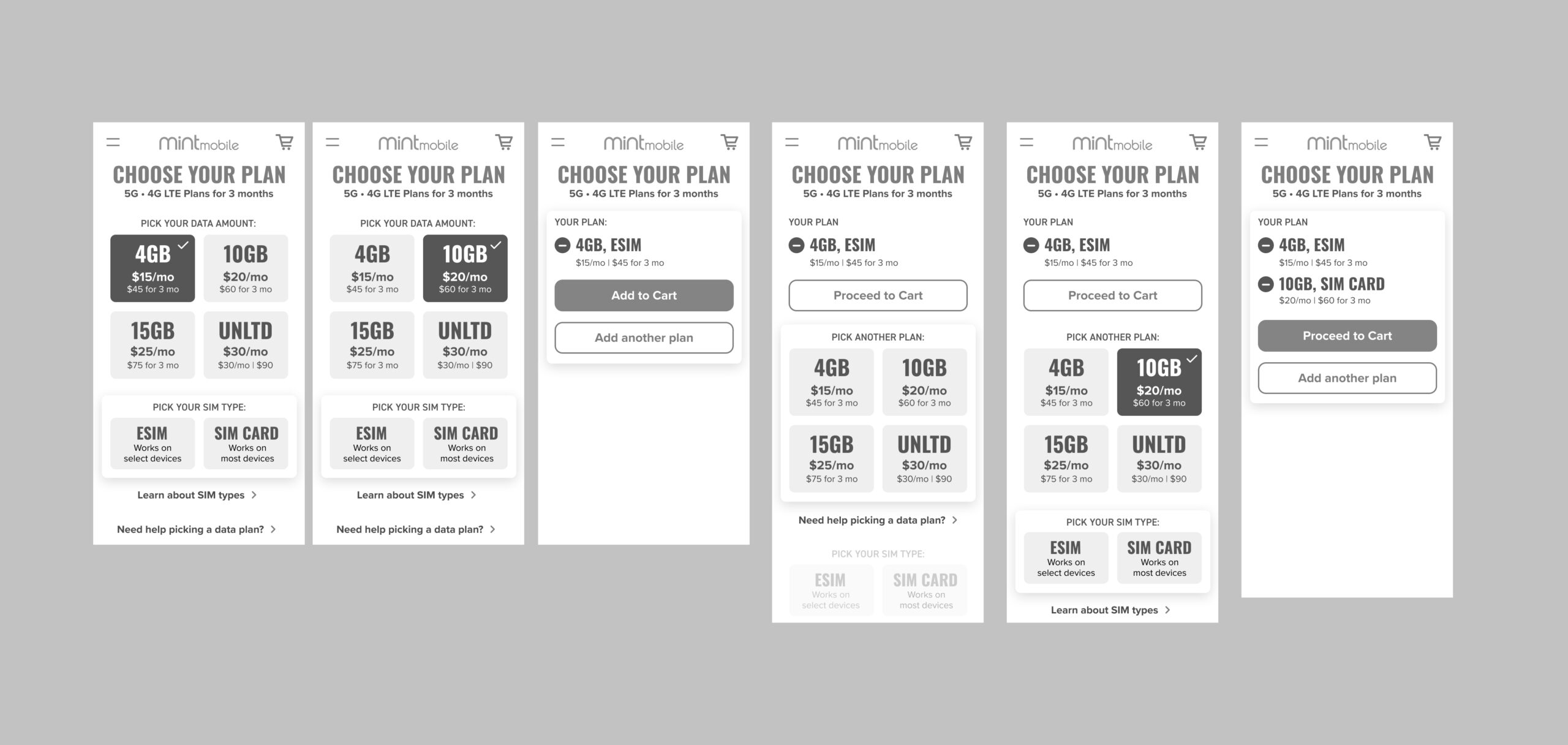
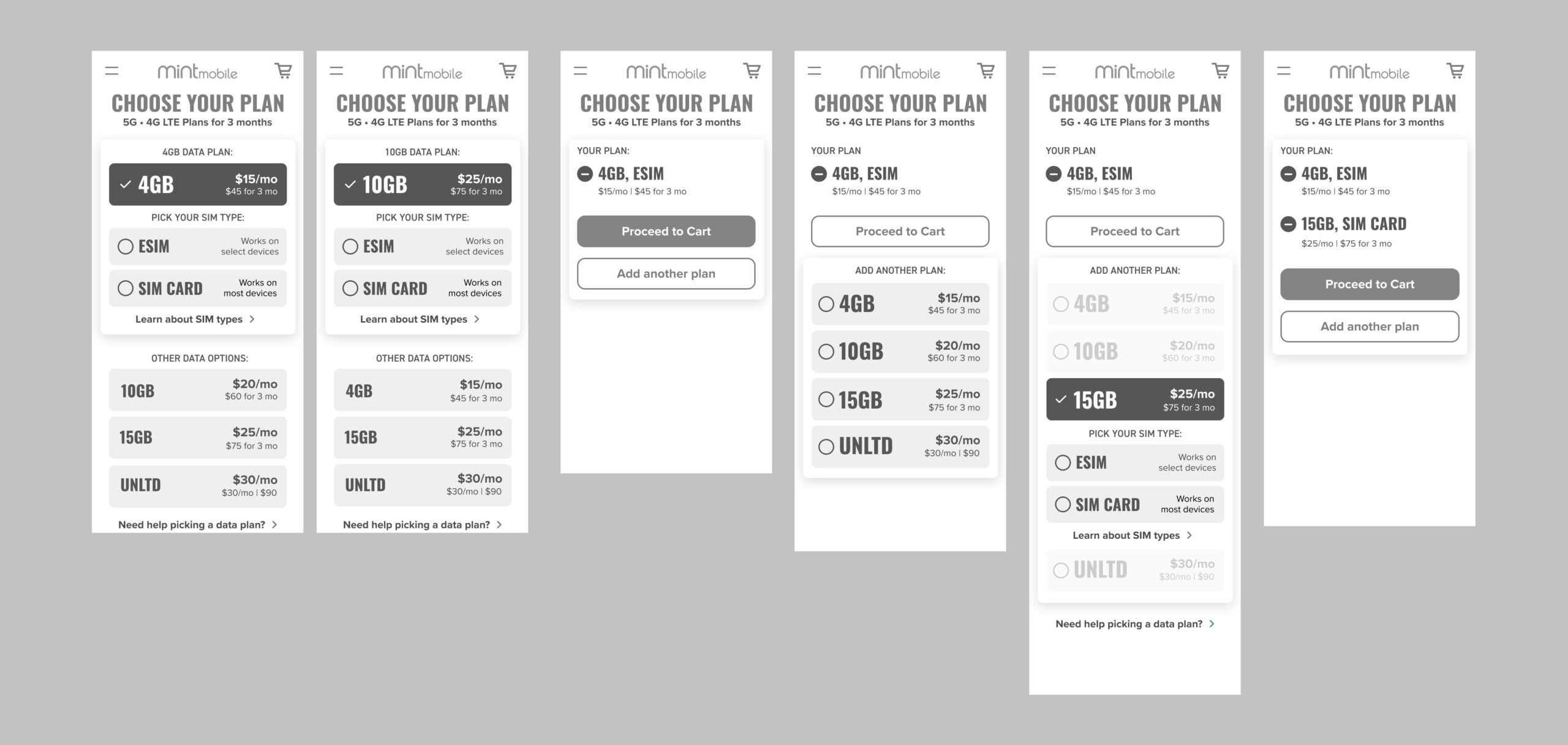
Before committing to a direction, we tested two fundamentally different approaches to plan selection. The first gave users a preselected starting point, a recommended plan already chosen for them, reducing the burden of an open ended decision. The second started from scratch, letting users choose from the full plan grid. Both were wireframed to the same fidelity and tested with real users under the same conditions.
The goal wasn't just to find the winner, it was to understand why. The data didn't just tell us which variant converted better. It told us where users were hesitating, what language was landing, and which moments in the flow were creating the most friction. That insight carried directly into the final design.
Final Design
A funnel that guides, not overwhelms
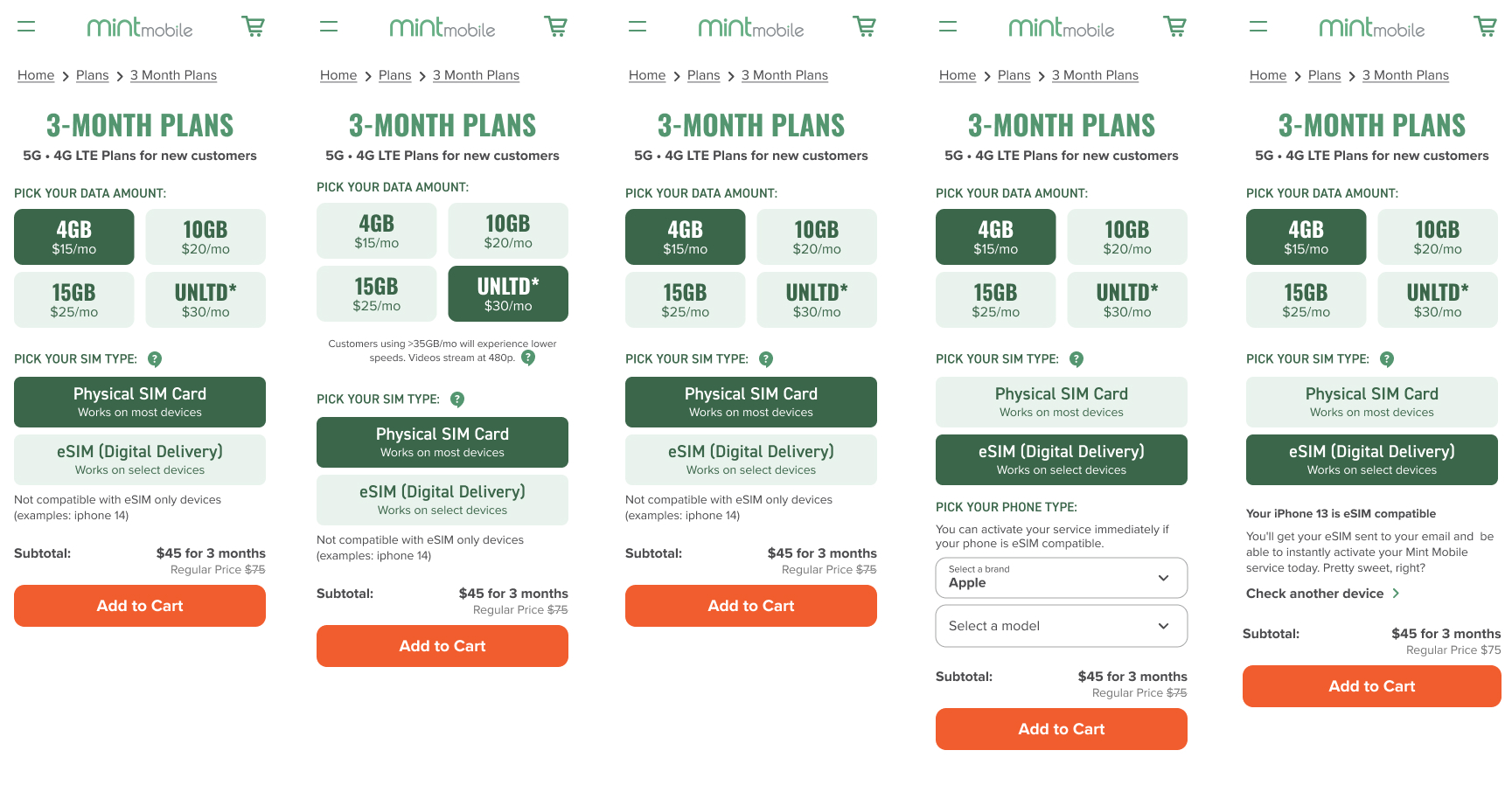
The final design carried the winning logic of the preselected model into a fully realized plans page, giving users a clear recommended starting point while keeping the full plan grid accessible. The SIM card decision was woven in at the natural moment in the flow rather than surfaced as a separate interruption.
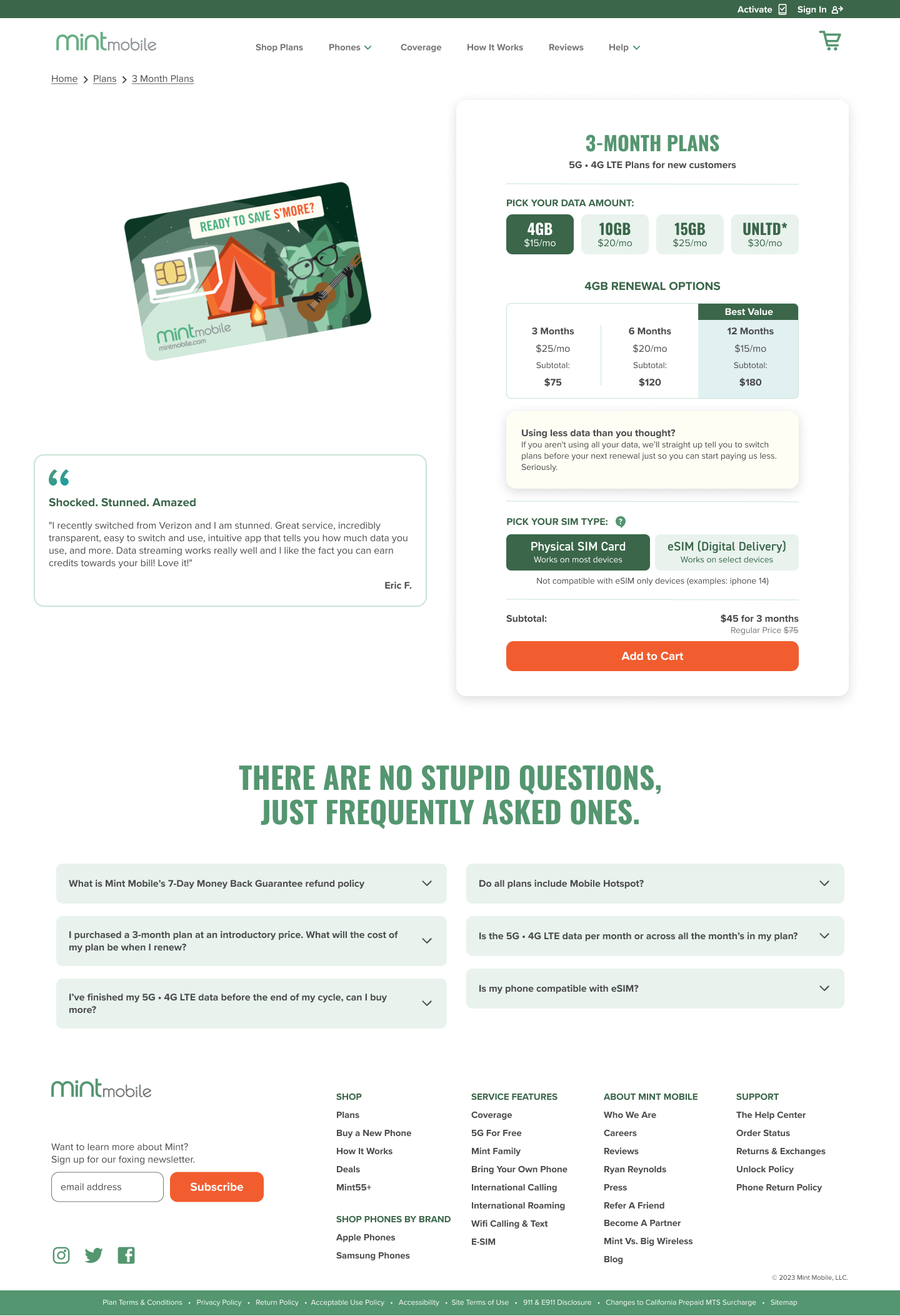
The desktop experience brought the same guided flow to a wider canvas, with the plan grid, SIM selection, and cart summary all visible in a single viewport without requiring the user to scroll to understand their options.
Business Results
Impact that moved the needle
The redesigned funnel delivered measurable improvements across every key metric Mint's ecommerce team was tracking. The strategic partnership model paid off: by aligning on goals upfront and maintaining a tight feedback loop with the client throughout, the team's design decisions translated directly into business outcomes rather than getting lost in rounds of late stage revisions.
Time-to-purchase dropped significantly as users moved through a clearer, more guided flow. Funnel drop off decreased across all three pages. And customer satisfaction scores improved, reflecting that the new experience felt easier and more trustworthy to complete.